Tuesday, 19 July 2011

New found Uranium mine in Andhra could be among largest in world

As usual I was reading todays newspaper suddenly came across the article in times of India “N-boost: Uranium mine in Andhra could be among largest in world” as I read it, it given me enough reason to joy. India's The Atomic Minerals Directorate for Exploration and Research (AMD), which explores uranium in the country, has so far discovered 44,000 tonnes of natural uranium (U3O8) in just 15 line km of the 160-km long belt in the southern part of the Kadapa basin in Andhra Pradesh. It is considered to be the largest uranium deposit in the world, but the final declaration on hold yet.

Studies show Tummalapalle in Kadapa district could have reserves of 150,000 tonnes of the mineral, Atomic Energy . India’s nuclear power aspirations just got a boost thanks to a lucky find. The Department of Atomic Energy (DAE) has discovered that the upcoming uranium mine in Andhra Pradesh’s Tumalapalli has close to 49,000 tonnes of uranium — three times the original estimate
of the area’s deposits. In fact, there are indications that the total quantity could go up to 1.5 lakh tonnes, which would make it among the largest uranium mines in the world.
  • The quantity is sufficient for supporting a nuclear power plant of 8,000mw capacity for 40 years.
  • Production will start in six months. Srikumar Banerjee, secretary of DAE and chairman of the Atomic Energy Regulatory Board, announced the discovery during the foundation stonelaying ceremony of the seventh and eighth units of the Rawatbhata atomic power project.
  • “It’s confirmed that the mine has 49,000 tonnes of ore, and there are indications that the total quantity could be three times of that amount. If that be the case, it will become the largest uranium mine in the world. The plant is ready, and will begin production by the end of this year.
  • India has two functioning uranium mines at present, both in Jharkhand. The total reserves are estimated to be in the range of 1.70 lakh tonnes. The discovery of the Tumalapalli deposit has at one stroke boosted the availability of uranium, lowering the country’s dependence on foreign supplies.

    Some bullet points:

  • Uranium reserves at Tumalapalli: 49,000 tonnes, 3 times more than previous estimates
  • Deposits could go up to around 1.5 lakh tonnes, which would make it
    among the world’s largest uranium mines.
  • Current deposits enough to run 8,000mw plant for 40 years
  • India’s known uranium deposits estimated at 1.7 lakh tonnes
  • India imports uranium but has no long-term supply contract
    Nuclear Power Corporation plans to built 14 N-plants of 700mw capacity each DAE took 4 yrs to study mine’s reserve
  • India has been procuring uranium on various terms from countries like France and Kazakhstan but does not yet have a long-term supply contract. The country continues to fancy nuclear energy as a possible solution for its energy needs. Unlike some other countries which have been forced to temper their enthusiasm for nuclear energy post-Fukushima, the government is persisting with its push for what is considered to be the cleanest source of energy.
  • The fact that Tumalapalli may have uranium reserves has been known for a while, but it took four years for the estimate to come to the present level from 15,000 tonnes in 2007. A 220-MW plant requires 45 tonnes of uranium per year, a 540-MW plant needs 80 tonnes and a 700-MW plant requires 100 tonnes per year.

    thanks

Wednesday, 13 July 2011

Interesting Facts about India


  • India never invaded any country in her last 100000 years of history.
  • When many cultures were only nomadic forest dwellers over 5000 years ago, Indians established Harappan culture in Sindhu Valley (Indus Valley Civilization)
  • The name 'India' is derived from the River Indus, the valleys around which were the home of the early settlers. The Aryan worshippers referred to the river Indus as the Sindhu.
  • The Persian invaders converted it into Hindu. The name 'Hindustan' combines Sindhu and Hindu and thus refers to the land of the Hindus.
  • Chess was invented in India.
  • Algebra, Trigonometry and Calculus are studies, which originated in India.
  • The 'Place Value System' and the 'Decimal System' were developed in India in 100 B.C.
  • The World's First Granite Temple is the Brihadeswara Temple at Tanjavur, Tamil Nadu. The shikhara of the temple is made from a single 80-tonne piece of granite. This magnificent temple was built in just five years, (between 1004 AD and 1009 AD) during the reign of Rajaraja Chola.
  • India is the largest democracy in the world, the 7th largest Country in the world, and one of the most ancient civilizations.
  • The game of Snakes & Ladders was created by the 13th century poet saint Gyandev. It was originally called 'Mokshapat'. The ladders in the game represented virtues and the snakes indicated vices. The game was played with cowrie shells and dices. In time, the game underwent several modifications, but its meaning remained the same, i.e. good deeds take people to heaven and evil to a cycle of re-births.
  • The world's highest cricket ground is in Chail, Himachal Pradesh. Built in 1893 after leveling a hilltop, this cricket pitch is 2444 meters above sea level.
  • India has the largest number of Post Offices in the world.
  • The largest employer in India is the Indian Railways, employing over a million people.
  • The world's first university was established in Takshila in 700 BC. More than 10,500 students from all over the world studied more than 60 subjects. The University of Nalanda built in the 4th century was one of the greatest achievements of ancient India in the field of education.
  • Ayurveda is the earliest school of medicine known to mankind. The Father of Medicine, Charaka, consolidated Ayurveda 2500 years ago.
  • India was one of the richest countries till the time of British rule in the early 17th Century. Christopher Columbus, attracted by India's wealth, had come looking for a sea route to India when he discovered America by mistake.
  • The Art of Navigation & Navigating was born in the river Sindh over 6000 years ago. The very word Navigation is derived from the Sanskrit word 'NAVGATIH'. The word navy is also derived from the Sanskrit word 'Nou'.
  • Bhaskaracharya rightly calculated the time taken by the earth to orbit the Sun hundreds of years before the astronomer Smart. According to his calculation, the time taken by the Earth to orbit the Sun was 365.258756484 days.
  • The value of "pi" was first calculated by the Indian Mathematician Budhayana, and he explained the concept of what is known as the Pythagorean Theorem. He discovered this in the 6th century, long before the European mathematicians.
  • Algebra, Trigonometry and Calculus also originated in India.Quadratic Equations were used by Sridharacharya in the 11th century. The largest numbers the Greeks and the Romans used were 106 whereas Hindus used numbers as big as 10*53 (i.e. 10 to the power of 53) with specific names as early as 5000 B.C.during the Vedic period.Even today, the largest used number is Terra: 10*12(10 to the power of 12).
  • Until 1896, India was the only source of diamonds in the world
    (Source: Gemological Institute of America).
  • The Baily Bridge is the highest bridge in the world. It is located in the Ladakh valley between the Dras and Suru rivers in the Himalayan mountains. It was built by the Indian Army in August 1982.
  • Sushruta is regarded as the Father of Surgery. Over2600 years ago Sushrata & his team conducted complicated surgeries like cataract, artificial limbs, cesareans, fractures, urinary stones, plastic surgery and brain surgeries.
  • Usage of anaesthesia was well known in ancient Indian medicine. Detailed knowledge of anatomy, embryology, digestion, metabolism,physiology, etiology, genetics and immunity is also found in many ancient Indian texts.
  • India exports software to 90 countries.
  • The four religions born in India - Hinduism, Buddhism, Jainism, and Sikhism, are followed by 25% of the world's population.
  • Jainism and Buddhism were founded in India in 600 B.C. and 500 B.C. respectively.
  • Islam is India's and the world's second largest religion.
  • There are 300,000 active mosques in India, more than in any other country, including the Muslim world.
  • The oldest European church and synagogue in India are in the city of Cochin. They were built in 1503 and 1568 respectively.
  • Jews and Christians have lived continuously in India since 200 B.C. and 52 A.D. respectively
  • The largest religious building in the world is Angkor Wat, a Hindu Temple in Cambodia built at the end of the 11th century.
  • The Vishnu Temple in the city of Tirupathi built in the 10th century, is the world's largest religious pilgrimage destination. Larger than either Rome or Mecca, an average of 30,000 visitors donate $6 million (US) to the temple everyday.
  • Sikhism originated in the Holy city of Amritsar in Punjab. Famous for housing the Golden Temple, the city was founded in 1577.
  • Varanasi, also known as Benaras, was called "the Ancient City" when Lord Buddha visited it in 500 B.C., and is the oldest, continuously inhabited city in the world today.
  • India provides safety for more than 300,000 refugees originally from Sri Lanka, Tibet, Bhutan, Afghanistan and Bangladesh, who escaped to flee religious and political persecution.
  • His Holiness, the Dalai Lama, the exiled spiritual leader of Tibetan Buddhists, runs his government in exile from Dharmashala in northern India.
  • Martial Arts were first created in India, and later spread to Asia by Buddhist missionaries.
  • Yoga has its origins in India and has existed for over 5,000 years.

Saturday, 9 July 2011

Google+ : A healthy wealthy threat to facebook:

Soon you'll be searching for friends in google +. Keeping in mind the demand and power of social networking sites google the largest search engine of the world is ready to enter into this market with its new virsion of social networking website Google plus. Currently the site is on trial version with limited number of accounts only but soon it will be full fledged standing head to head with facebook. It will be available in over 40 different languages.


What is google +?
It is a social networking service operated by Google Inc. The service launched on June 28, 2011, in an invite-only testing phase. The following day, existing users were allowed to invite friends, who are above 18 years of age, to the service to create their own accounts. However, this was quickly suspended in a day after there was "insane demand" for accounts. Google+ will be built as a layer that not only integrates different Google social services, such as Google Profiles and Google Buzz, but also introduces many new features including Circles, Hangouts, Sparks and Huddles. Google+ will also be available as a desktop application and as an application on Android and iOS operating systems. Sources such as The New York Times have declared it Google's biggest attempt to rival the social network Facebook, which had over three quarters of a billion users in 2011.


Key features of google + :
  • "Circles" enables users to organize contacts into groups for sharing, across various Google products and services. Although other users can view a list of people in a user's collection of circles, they cannot view the names of those circles. The privacy settings also allows users to hide the users in their circles as well as who has them in their circle. Organization is done through a drag-and-drop interface. This system replaces the typical friends list function used by sites such as Facebook.
  • "Huddle" is a feature available to Android, iPhone, and SMS devices for communicating through instant messaging within circles.
  • "Hangouts" are places used to facilitate group video chat (with a maximum of 10 people participating in a single Hangout at any point of time). However, anyone on the web could potentially join the 'Hangout' if they happen to possess the unique URL of the Hangout.
  • "Instant Upload" is specific to Android mobile devices; it stores photos or video in a private album for sharing later.
  • "Sparks" is a front-end to Google Search, enabling user to identify topics they might be interested in sharing with others; "featured interests" sparks are also available, based on topics others globally are finding interesting.
  • Through "Streams," users see updates from those in their circles, updates similar to Facebook's news feed. The input box allows users to enter a status update or use icons to upload and share photo and videos.

Google+ reportedly had a remarkably higher ratio of men than women at launch, because it was initiated by invitation from a population of the primarily young male software engineers at Google.

How google + better than facebook:

1) Google+ Circles: Better Privacy Control

Rather than having a Facebook’s Friends’ list, Google+ groups your friends via +Circles. And the best thing about these +Circles are that it allows you to share your status update or photo or anything with your choice of +Circle. This is something that gives Google+ a bit edge over Facebook in privacy control.

2) Google+ Hangouts: Allows Video Chat For Up To 10 People

Considering the fact that Facebook even now doesn’t have the video chat feature, tech buffs are already pointing out where Google+ already is ahead in the social networking game. Using +Hangouts in Google+, 10 people at a time could video chat using +Hangouts.

3) +Sparks: Choose Who to Share News/Topics With

This  by far is our favorite feature, and the simple reason for that being the fact that the +Sparks gives articles and videos that it thinks you might be interested in reading and hence gives you something to read, watch and share whenever you are free. A Google+ user might want to share a news or video with specific Circles in their Social Network, and the good thing here is that if you want you can either share the news or topic with a certain Circle on your social network or can share it with all of your connections on Google+.

4) Google + Safer Content Sharing.a Privacy advocate has social networking sites for long. The user can assign a degree of confidentiality of each share content, instead of using a configuration of the predefined list of privacy. All actions can be called to decide


So lets see who wins google or facebook.

Thanks

Thursday, 7 July 2011

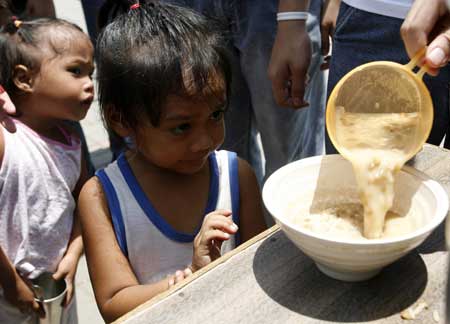
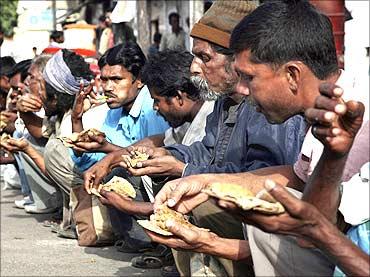
INDIA POVERTY AND FOOD SECURITY BILL

In today's topic of blog I would like to discuss regarding the National Food Security bill which is been in the final steps to be approved by the current UPA government for the well being of people of our country.

It was promise of UPA II agenda to introduce this bill in their session. President Pratibha Patil on June 4, 2009 said that a National Food Security Act would be formulated
The National Advisory Council (NAC), which is headed by Sonia Gandhi, has finalised its draft of the Food Security Bill.  Mrs Gandhi will forward this document to the Prime Minister.

The historic Food Security Bill entitles 75% of India's population to highly-subsidized foodgrains.
 
The Bill says  two types of households are eligible for discounted grain - "priority households" which are below the poverty line (BPL); and "general households" which consist of Lower Middle Class families.

Priority households are entitled to 35 kilograms per month of foodgrains at these rates   -  Rs. 3 per kg of rice, Rs. 2 per kg of wheat and Rs. 1 per kg of millets. General households have the right to 20 kilograms at a price not exceeding 50% of the Minimum Support Price paid to farmers for the three grains.

What is Food Security Act?

It was one of the political agenda of congress during there 2004 and 2009 elections. Food security is a proposed act which makes food availability a right for every citizen of India. It aims to give common man to lead a healthy and productive life. Antyodaya Anna Yojana (AAY) is a centrally sponsored scheme launched on December 2000 for one crore of the poorest families. It is on the look out for the 'poorest of the poor' by providing them 35 kilos of rice and wheat at Rs.2 per kg. Whereas the National Food Security Act helps the poor to purchase 25 kg of rice or wheat per month at Rs.3 per kg. It calls for broader reforms in the public distribution system. Food Security Act takes into consideration the following three important aspects:
  • Food Availability.
  • Food Access.
  • Food Absorption.
HIGHLIGHTS OF FOOD SECURITY BILL:
  • It covers 90% of rural population and 50% of urban India.
  • 46% of rural households and 38% of urban households are entitled to the lowest rates; together, they add upto 40% of India's total population.

-  Every person shall have the right of access to sufficient and safe food either directly or by purchasing the food.

- The central and state government shall share the financial cost of procuring, storing and distributing food grains to the population entitled to it.

-  There are special provisions for pregnant and lactating mothers, children in the 0-6 age group, destitute persons, homeless persons and disaster affected persons.  The appropriate government shall take immediate steps to provide relief to persons living in starvation.

- The state government shall provide all children upto class 8 freshly cooked meal in all schools run by local bodies and the government.  It shall also provide mid-day meals to children who are admitted under the 25% quota for children belonging to disadvantaged groups in unaided private schools

- Each household shall be categorised into priority and general in rural and urban areas.

-  Each individual in the priority group households shall be entitled to at least 7kg of grain every month at a maximum price of Rs 3/kg for rice, Rs 2/kg for wheat and Rs 1/kg for millets.

- Each individual in the general group households shall be entitled to 4kg of grain per month at 50 per cent of the Minimum Support Price for paddy, wheat and millet.

-  The state government can exclude certain persons who fulfil the exclusion criteria in rural and urban areas.  However, it has to cover at least 90% of the population in rural areas and 50% of the population in urban areas.

-  The Bill lays down norms for procurement, storage and distribution of food grains under the Public Distribution System.  It also gives detailed norms for Fair Price Shops, ration cards, and monitoring the system.

- It seeks to set up a National Food Commission and State Food Commission in each state.  The Commission shall inquire into complaints on denial of entitlement, advise central and state governments and monitor the schemes.  Each district shall have a District Grievance Redressal Officer.

- The Bill includes penalties for dereliction of duty by public servants, which includes deduction of penalty from the salary of the public servant.

-  Any person deprived of his entitlement to food shall be entitled to compensation from the appropriate government.

-   The Gram Sabhas should conduct social audits of all schemes under this Act.


The cheapest rates of Rs. 3, 2 and 1 will cover 40% of the country's total population.

Some estimates suggest this could cost the government $22.3 billion or Rs. 1.1 trillion per year .
How The Right to Food Campaign started:

In April 2001, the People’s Union for Civil Liberties (PUCL) Rajasthan had filed a writ petition in the Supreme Court against the Government of India, Food Corporation of India, and six state governments. The petition contended that the right to food was a fundamental right under “the right to life” provided by Article 21 of the Constitution of India.


Any government official falling foul of the law by the district grievance redress system or state or national commission would be liable to pay up to Rs 5,000 as penalty from h/his salary.

Now, it's up to the government to finalize a draft so that it can be introduced in Parliament's monsoon session as had been suggested earlier.


As it is one of the good step taken by the government toward the well being of country to help the poor but the time will say what exactly the benefit will it give to the people when it comes. In our country various bill introduced and withdrawn but each time the benefit access always remain not more than 10%. The middlemen and government official are the real benefit taker of these schemes. Be positive and hope for the best. If possible please do educate people nearby you regarding this so that maximum benefit should reach to the people for whom it has been made


Thanks

Wednesday, 6 July 2011

Grand slams 2011 (Latest wimbeldon results)


(TENNIS) GRANDSLAM 2011 RESULT:

The Championships, Wimbledon 2011 RESULTS:(20 June – 3 July in 2011)  
Wimbeldonwinnercountrylosercountry
Men singleNovak DjokovicserbiaRafal Nadal spain
women singlePetra Kvitová Czech republicMaria Sharapova Russia
mixed doublesJürgen Melzer
&Iveta Benešová
Austria/Czech republicMahesh Bhupathi&
Elena Vesnina
India/ Russia
men doublesBob Bryan
Mike Bryan
United StatesRobert Lindstedt and Horia Tecău Sweden /Romania
women doublesKvěta Peschke& Katarina SrebotnikCzech republic/sloveniaSabine Lisicki &
Samantha Stosur
Germany /Australia
FRENCH OPEN 2011 RESULTS:
Nadal wins french open 2011 it was his 6th french open equaling borg's records and 10th grandslam beated roger
 
FRENCH OPENwinnercountrylosercountry
Men singleRafal Nadal spainRoger federerswitzerland
women singleLI NaChinaFrancesca Schiavone,Italy
mixed doublesCasey Dellacqua and Scott Lipsky Australia/ USKatarina Srebotnik and Nenad ZimonjicSlovenia/ Serbia
men doublesMax Mirnyi and Daniel Nestor Belarus / canadaJuan Sabastian and Eduardo SchwankColumbia/ argentina
women doublesAndrea Hlavakova and Lucie Hradecka Czech republicSania mirza/ Elena VesninaIndia / Russia

Australia open 2011:
 
AUSTRALIA OPENwinnercountrylosercountry
Men singleNovak DjokovicserbiaAndy MurrayUK
women singleKIM CLIJSTERbelgiumLI NAchina
mixed doublesKatarina Srebotnik
Daniel Nestor
slovenia/ canadaYung-Jan Chan
Paul Hanley
chinese tapai/ australia
men doublesBob Bryan
Mike Bryan
United StatesMahesh Bhupathi
Leander Paes
India
women doublesGisela Dulko
Flavia Pennetta
Argentina /Italy Victoria Azarenka
Maria Kirilenko
Belarus \ Russia


Im very happy that Novak Djokovic won wimbeldon championship beating nadal  and now ranked 1st in ATP ranking. I hope US open winner shoul be Roger federer of switzerlan. Im confident he will be in form soon.

thanks

Monday, 20 June 2011

THREE WISE MEN Story..........

THREE WISE MEN


A woman came out of her house and saw three wise men with long white beards sitting in her front yard. She said, “I don't think I know you, but you must be hungry. Please come in and have something to eat.” “Is your husband at home?” they asked. No, she said. “He's out. Then we cannot come in.” they replied. In the evening when her husband came home, she told him what had happened.

“Go tell them I am home, and invite them in!” the woman went out and invited them in. “We do not go into a house together,” they replied. “Why is that?” she asked. One of the wise men explained: “His name is Wealth,” he said pointing to one of his friend. And pointing to the other he said: “He is Success, and I am Love.” Then he added, “Now go in and discuss with your husband which one of us you want in your home.”

The woman went in and told her husband what was said. Her husband was overjoyed, “How nice,” he said. “Then let us invite Wealth. Let him come in and fill our home with Money!” His wife disagreed. “My dear, why don't we invite Success?” Their daughter-in law jointed in with her own suggestion: would it not be better to invite Love? The woman said: “Which one of you is Love? Please come in and be our guest. Love got up and started walking toward the house. The other two also got up and followed him. Surprised, the lady asked Wealth and Success: “I only invited Love; where you coming?” The wise men replied together: “If you had invited Wealth or Success, the other two of us would've stayed out, but since you invited Love, wherever Love goes, we also go with him.

Wherever there is Love, there is Wealth and Success also!


Hence Love your family; Love your office; Love your work---and success and wealth shall fellow you

Saturday, 11 June 2011

Journey of Maqbool Fida Husain - MF HUSAIN


On June 9, 2011, at the age of 95, Maqbool Fida Husain breathes his last in a London hospital following a heart attack.


He moved to Mumbai in 1935 and joined Sir JJ School of Arts for a year. In 1937, he began his career painting cinema hoardings for a living. (TOI Photo)


In 1946, Francis Newton Souza, another famous artist, invites him to join the Bombay Progressive Artists Group. The following year, he debuts in art world, with his painting “Sunhera Sansaar” winning an award at annual exhibition of Bombay Art Society. (TOI Photo)


MF Husain's first solo exhibition was held in Mumbai in 1952, and first international solo exhibition at Zurich in the same year.


He makes his first film, "Through the Eyes of a Painter" in 1967 and won the Golden Bear at Berlin Film Festival.


In 1971, he was a special invitee, along with Pablo Picasso (inset), at Sao Paulo Biennial

He has been awarded the Padma Bhushan in 1973 and was nominated to the Rajya Sabha in 1986. He was awarded the Padma Vibhushan in 1991.


In 1996, Husain's works became controversial because of their portrayal of Hindu deities in the nude and eight criminal complaints were filed against him. In 1998, his home in Mumbai was attacked by Hindu groups and his art works vandalized.


In 2004, Delhi HC dismisses complaints of “promoting enmity between different groups” by painting goddesses Durga and Sarswati in the nude. However, charged with hurting religious sentiments, MF husain leaves India in 2006 never come back.


He accepts Qatari citizenship in 2010 but remains vocal about his desire to return to India.


On June 9, 2011, at the age of 95, Maqbool Fida Husain breathes his last in a London hospital following a heart attack.

Thursday, 9 June 2011

Tennis Grand slam 2011 results


FRENCH OPEN 2011 RESULTS:

 
FRENCH OPENwinnercountrylosercountry
single maleRafal Nadal spainRoger federerswitzerland
single femaleLI NaChinaFrancesca Schiavone,Italy
mixed doublesCasey Dellacqua and Scott Lipsky Australia/ USKatarina Srebotnik and Nenad ZimonjicSlovenia/ Serbia
male doublesMax Mirnyi and Daniel Nestor Belarus / canadaJuan Sabastian and Eduardo SchwankColumbia/ argentina
female doublesAndrea Hlavakova and Lucie Hradecka Czech republicSania mirza/ Elena VesninaIndia / Russia

AUSTRALIA OPEN 2011 RESULTS:

 
AUSTRALIA OPENwinnercountrylosercountry
single maleNovak DjokovicserbiaAndy MurrayUK
single femaleKIM CLIJSTERbelgiumLI NAchina
mixed doublesKatarina Srebotnik
Daniel Nestor
slovenia/ canadaYung-Jan Chan
Paul Hanley
chinese tapai/ australia
male doublesBob Bryan
Mike Bryan
United StatesMahesh Bhupathi
Leander Paes
India
female doublesGisela Dulko
Flavia Pennetta
Argentina /Italy Victoria Azarenka
Maria Kirilenko
Belarus \ Russia


Monday, 6 June 2011

Biggest, Highest and Largest in India

 
Highest Award Bharat Ratna
Highest Gallantry Award Param Vir Chakra
Longest River in India The Ganges
Longest Tributary river of India Yamuna
Largest Lake Wular Lake, Kashmir
Largest Lake (Saline Water) Chilka Lake, Orrisa
Largest Man-Made Lake Govind Vallabh Pant Sagar (Rihand Dam)
Largest Fresh Water Lake Kolleru Lake (Andhra Pradesh)
Highest Lake Devtal Lake, Gadhwal (Uttarakhand)
Highest Lake Devatal (Gharhwal)
Highest Peak Karkoram-2 of K-2(8,611 meters)
Highest Peak in the world is Mount Everest which is in Nepal
Largest Populated City Mumbai
Largest State Rajasthan
Highest rainfall Cherrapunhi (426 inches per annum)
Highest Watefall Gersoppar Waterfall (292 meters high) in Mysore
State wise largest area under forest Madhya Pradesh
Largest Delta Sunderbans Delta
Largest River without Delta Narmada and Tapti
Longest Cantilever Span bridge Howrah Bridge
Longest River Bridge Mahatma Gandhi Setu, Patna
Biggest Cave temple Ellora
Longest Road Grand Trunk Road
Highest Road Road at Khardungla,(in Leh-Manali Sector)
Biggest Mosque Jama Masjid at Delhi
Highest Gateway Buland Darwaza at Fatehpur Sikri (53.6 meters high)
Tallest Statue Statue of Gomateshwar (17 meters high In Karnataka
Largest Public Sector Bank State Bank of India
Longest Canal Indira Gandhi Canal or Rajasthan Canal (Rajasthan)
Largest Dome Gol Gumbaz at Bijapur
Largest Zoo Zoological Garden at Alipur (Kolkata)
Largest Museum India Museum at Kolkata
Longest Dam Hirakud Dam (Orrisa)
Highest Dam Bhakra Dam ( 225.5 meters high)
Highest Tower Kutab Minar at Delhi (88.4 meters high)
Largest Desert Thar (Rajasthan)
Largest District Ladakh
Fastest Train Shatabadi Express running between New Delhi and Bhopal
State with longest coastline Gujarat
State with longest coastline of South India Andhra Pradesh
Longest Electric Railway Line From Delhi to Kolkata via Patna
Longest Railway Route From Jammu to Kanyakumari
Longest Railway Platform Kharagpur (W. Bengal)
Longest Platform Kharagpur (West Bengal) 833 meters in Length. It is also the longest railway station in world
Longest Tunnel Jawahar tunnel (Jammu & Kashmir)
Longest Highway NH-7 which turns from Varanasi to Kanyakumari
Smallest State (Population) Sikkim
Smallest State (Area) Goa
Largest State (Area) Rajasthan
Largest State (Population) Uttar Pradesh
Densest Populated State West Bengal
Largest Cave Amarnath (J&K)
Largest Cave Temple Kailash Tmeple, Ellora (Maharastra)
Largest Animal Fair Sonepur (Bihar)
Largest Auditorium Sri Shanmukhanand Hall (Mumbai)
Biggest Hotel Oberai-Sheraton (Mumbai)
Largest Port Mumbai
Largest GurudwaraGolden Temple, Amritsar
Deepest River Valley Bhagirathi & Alaknanda
Largest Church Saint Cathedral (Goa)
Oldest Church St. Thomas Church at Palayar, Trichur (Kerala)
Longest River Ganga (2640 km long)
Longest Beach Marina Beach, Chennai
Highest Battle Field Siachin Glacier
Highest Airport Leh (Laddakh)
Biggest Stadium Yuva Bharti (Salt Lake) Stadium, Kolkata
Largest River Island Majuli (Brahmaputra River, Asom)
Largest PlanetariumBirla Planetarium (Kolkata)

Saturday, 4 June 2011

First in India


 1. British Governor General of BengalWarren Hastings
2. Governor General of Independent IndiaLord Mountbatten
 3. Commander-in-chief of Free IndiaGeneral Roy Bucher
 4. Cosmonaut Sqn. Ldr. Rakesh Sharma
 5. Emperor of Moghul Dynasty in IndiaBabar
 6. Field MarshalS. H. F. J. Manekshaw
 7. Indian Governor General of Indian UnionC. Rajagopalachari
 8. Indian I.C.S. OfficerSatyendra Nath Tagore
 9. Indian Member of Viceroy's Executive CouncilSri S.P. Sinha
 10. Indian to swim across English ChannelMihir Sen
 11. Indian woman to swim across-English Channel Miss Arati Saha
12. Man to climb Mount EverestTenzing Norgay
 13. Man to climb Mount Everest without Oxygen Phu Dorjee
 14. Man to climb Mount Everest twiceNwang Gombu
 15. Nobel Prize winnerRabindra Nath Tagore
16. President of Indian National CongressW. C. Banerjee
 17. President of Indian RepublicDr. Rajendra Prasad
 18. Talkie FilmAlam Ara (1931)
 19. Test Tube Baby (Documented)Indira
 20. Viceroy of IndiaLord Canning
 21. Woman Minister of Indian UnionRajkumari Amrit Kaur
 22. Woman Chief Minister of StateMrs. Sucheta Kriplani
 23. Woman GovernorMrs. Sarojini Naidu
 24. Woman President of Indian National Congress Dr. Annie Besant
 25. Woman Prime MinisterMrs. Indira Gandhi
 26. Woman Speaker of a State AssemblyMrs. Shanno Devi
 27. Prime Minister of IndiaPt. Jawahar Lal Nehru
 28. Muslim President of Indian UnionDr. Zakir Hussain
 29. Speaker of Lok SabhaG. V. Mavlankar
30. Woman to climb mount EverestBachhendri Pal
31. Woman Judge in Supreme CourtMrs. Meera Sahib Fatima Biwi
32. Woman Chief Justice of a High CourtSmt. Leela Seth
33. Indian Woman to go in space (Now U.S. Citizen) Kalpana Chawla
34. The first Indian weightlifter to win bronze medal in OlympicsKarnam Malleshwari
(Sydney, in 2000)
35. The First Indian World Chess ChampionVishwanathan Anand
36. India's first paperless NewspaperThe News Today
(Launched on Jan. 3, 2001)
37. India's First woman Merchant Navy OfficerSonali Banerjee
38. The first Dalit Speaker of the Lok SabhaG. M. C. Balyogi
39. The first Vice-President of India to die in harnessKrishna Kant
40. The first Indian woman cricketer to score double centuryMithali Raj (August 2002 playing
 against England)
41. The first woman Air Vice-MarshalP. Bandopadhyaya
42. The first Indian to be appointed as United Nations Civilian Police AdvisorMs. Kiran Bedi
43. The first astronaut of Indian origin to perish aboard U.S. space shuttle in a tragic accident Dr. Kalpana Chawla
(Columbia space shuttle, Feb. I, 2003)
44. The first woman to be appointed Deputy Governor of Reserve Bank of India K. J. Udeshi
(appointed on June 10, 2003)
45. The first Indian girl to register a win in a Wimbledon tournamentSania Mirza (2003)
46. The first Indian lady to win a medal in World Athletic ChampionshipAnju Bobby George (Aug. 2003)
47. The first woman Chairman and Managing Director of NABARDMrs. Ranjana Kumar
48. The highest individual test scorer of IndiaVirendra Sehwag ( 309 runs in the
 first test in Multan against Pakistan)
49. The first Indian cricketer to make double centuries five timesRahul Drgvid (playing test against
Pakistan in Pakistan in. April 2004)
50. The first Orissa woman to top I.A.S.Smt. Roopa Misra
(Indian Civil Services Exam., 2003)
51. The first Sikh Prime Minister of India Dr. Manmohan Singh
52. The first woman Director General of Police of a StateKanchan C. Bhattacharya
(DGP Uttaranchal)
53. The first woman to be appointed as the crime branch chiefMeeriJ Borwankar (took over as crime branch chief of Mumbai police)
54. The first woman to reach the rank of Lt. General in the Indian armyPuneeta Arora (Commandant, Armed Forces Medical College, Pune)
55. The first Indian to cross seven important seas by swimmingBula Chaudhury
56. The first woman to become Indian Air Force's first woman Air MarshalAir Marshal Padma Bandhopadhyay
57. The first youngest MP, at the age of 25 yearsDharmendra Yadav
(Mainpuri : Samajwadi Party MP)
58. India's first woman athlete to win WTA open Tennis titleSania Mirza (Feb. 2005, Hyderabad)
59. The first Indian to set a world record of ever having reached the highest
of heights yet in a hot balloon
Vijaypath Singhania
(Nov. 26, 2005. 69852 ft.)
60. The first wonder child of Orissa only about 4 years and a half of age completes a race of 65 km.Budhia (May 2006)
61. The first woman Commissioner of Police of an Indian metro (Chennai Metro Police)Letika Saran
62. The first Indian to Ski to the North PoleAjeet Bajaj (April 26, 2006)
63. The first sportsman ever to win Gold Medal in Shooting in the World Shooting ChampionshipAbhinav Bindra (July 24, 2006)
64. The first person of Indian origin to win the Miss Great Britain titlePreeti Desai (2006)
65. The first woman President of the Republic of India Pratibha Patil